Monitoring Desk
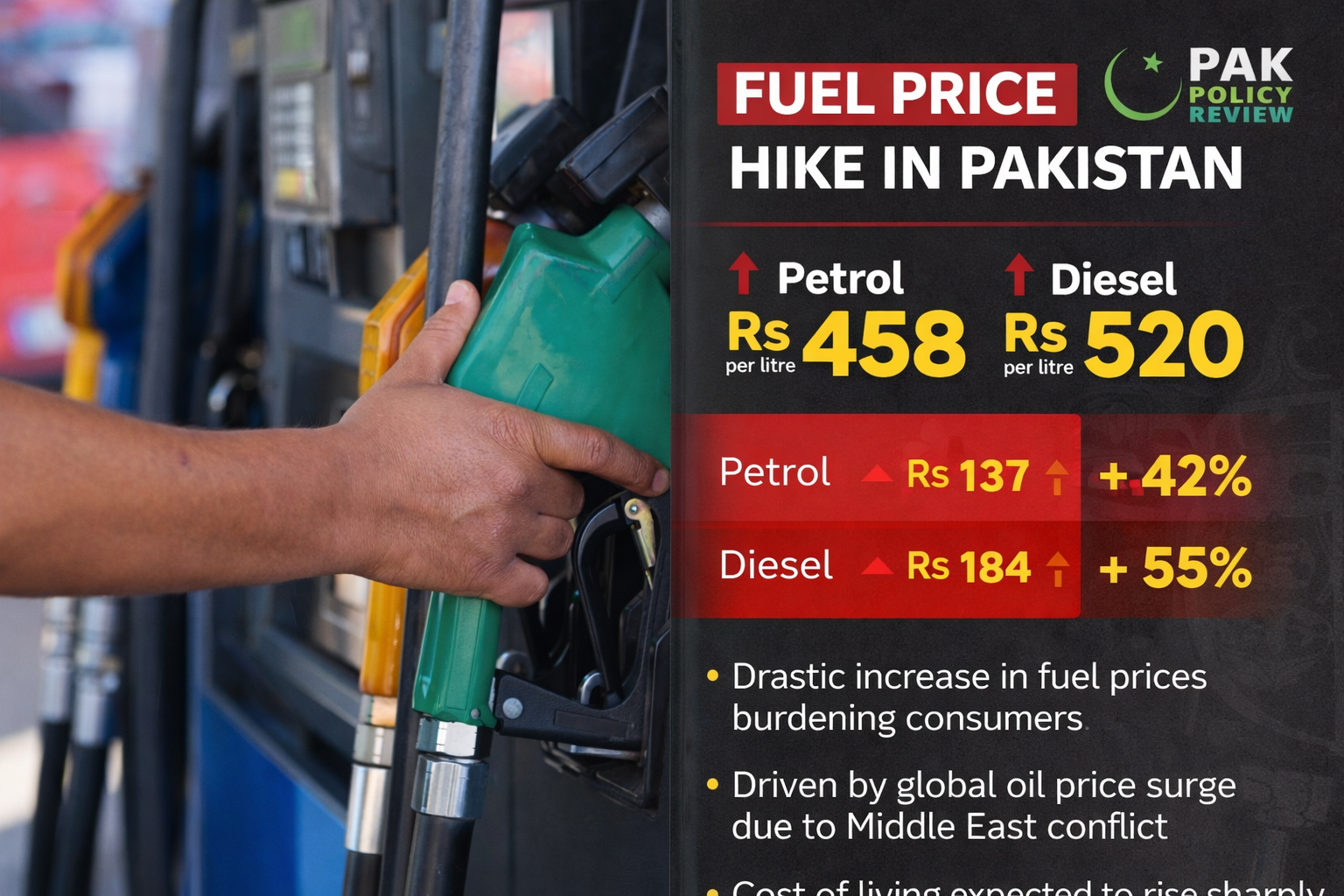
ISLAMABAD: Pakistan has witnessed an unprecedented surge in fuel prices, with the federal government announcing a massive increase in petroleum rates, pushing petrol to over Rs458 per litre and high-speed diesel beyond Rs520 per litre. The new prices came into effect from midnight, triggering widespread concern over inflation and economic stability.
According to official notifications, petrol prices were increased by approximately Rs135–137 per litre, marking one of the largest hikes in the country’s history. Diesel prices saw an even sharper rise of nearly 55%, reflecting the government’s attempt to pass on the burden of rising international oil costs to consumers.
Global Crisis Driving Local Prices
The sharp increase has been largely attributed to escalating tensions in the Middle East, which have disrupted global oil supply chains and driven crude oil prices upward. Analysts point to the ongoing conflict involving Iran and Western powers as a key factor behind the volatility in global energy markets. (Reuters)
Pakistan, heavily dependent on imported fuel, has been particularly vulnerable to these external shocks. With global oil prices rising sharply, the government stated it had limited fiscal space to continue subsidies, forcing a direct transfer of costs to consumers. (Reuters)
Economic Fallout and Public Impact
The hike is expected to have far-reaching consequences across the economy. Transport costs are likely to increase immediately, followed by a surge in food prices and overall inflation. Economists warn that the burden will disproportionately affect low- and middle-income households already struggling with rising living costs.
In response, the government has announced targeted relief measures, including subsidies for small farmers, motorcyclists, and public transport sectors. However, officials have acknowledged that broad-based subsidies are no longer sustainable due to fiscal constraints. (Reuters)
Political and Policy Implications
The decision has intensified political debate, with critics accusing the government of mismanaging economic policy and over-reliance on taxation. The increase in petroleum levy has also raised concerns about revenue-driven pricing strategies rather than consumer relief.
Policy experts suggest that the crisis underscores Pakistan’s urgent need to diversify energy sources, invest in renewables, and reduce dependence on imported oil to shield the economy from global shocks.