By Salma Shahwani
Vitamins are essential nutrients required for the proper functioning of the human body, playing a vital role in maintaining overall health, immunity, and development. Among them, Vitamin D is particularly important due to its critical role in bone strength, immune function, and metabolic regulation.
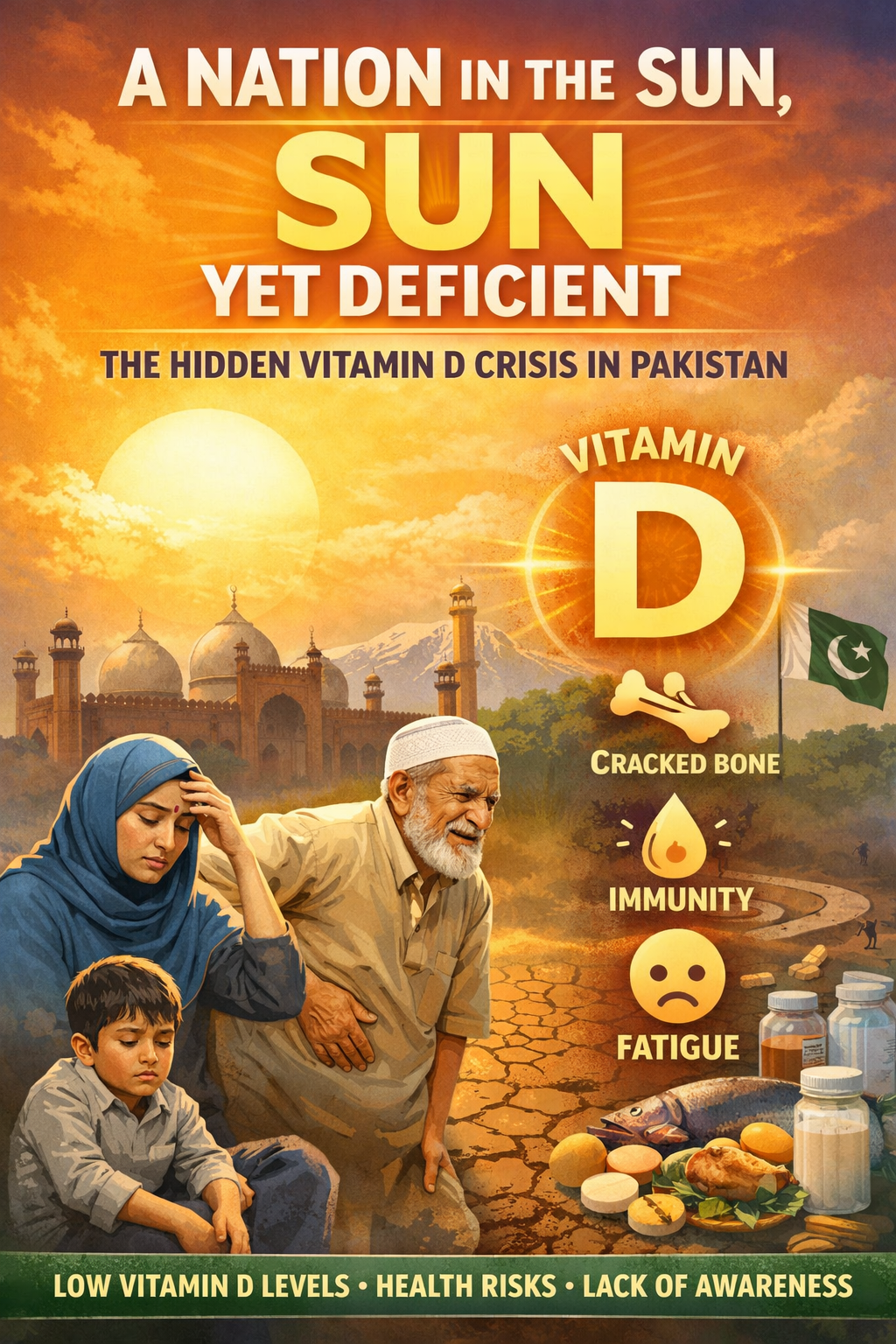
The vast majority of people in Pakistan suffer from Vitamin D deficiency. Despite abundant sunshine, studies indicate that nearly 70% to over 80% of the population is affected, highlighting a significant yet often overlooked public health concern.
Vitamin D, commonly known as the ‘sunshine vitamin’, is primarily produced in the skin upon exposure to sunlight. However, several factors contribute to its widespread deficiency in Pakistan. Rapid urbanization has led to predominantly indoor lifestyles, with people spending most of their time inside homes, offices, universities, and colleges. Daily routines often involve traveling in cars, buses, or other forms of transport, limiting opportunities for direct sun exposure. Even during daytime hours, academic, professional, and personal responsibilities keep much of the population indoors. Additionally, high levels of air pollution reduce the intensity of sunlight reaching the ground, while limited dietary intake of Vitamin D-rich foods further exacerbates the problem.
This deficiency affects millions across all age groups, including children, adults, and the elderly. Studies suggest that women are more likely to be deficient compared to men. This disparity is largely due to relatively lower sun exposure in daily routines combined with increased nutritional demands during stages such as pregnancy and lactation. Lifestyle patterns that restrict outdoor activity can further contribute to this imbalance.
The consequences of Vitamin D deficiency extend beyond clinical symptoms, significantly affecting daily life. Individuals with low Vitamin D levels often experience fatigue, muscle weakness, bone pain, and low energy, which can reduce productivity and the ability to perform routine tasks efficiently. In children, deficiency can lead to impaired bone development, while in adults, it increases the risk of osteoporosis and fractures. Emerging research also links Vitamin D deficiency to weakened immunity and mood disturbances, including depression.
One of the most concerning aspects of this issue is that it often goes undiagnosed. However, diagnosis is simple and accessible. A single blood test, the 25-hydroxy Vitamin D test, can accurately measure Vitamin D levels in the body.
Fortunately, treatment and prevention are straightforward. Natural sources remain the most effective and sustainable solution. Regular exposure to sunlight, particularly during morning hours, can significantly improve Vitamin D levels. Dietary sources such as eggs, fatty fish (like salmon and tuna), fortified milk, and dairy products also contribute to maintaining adequate levels. In cases of severe deficiency, Vitamin D supplements prescribed by healthcare professionals can help restore normal levels safely.
While Vitamin D deficiency is the most widespread, it is not the only nutritional concern in Pakistan. Deficiencies of iron, Vitamin B12, and Vitamin A are also commonly observed, reflecting a broader issue of nutritional imbalance across the population.
Addressing this silent epidemic requires greater public awareness, informed dietary choices, and small lifestyle adjustments to increase sun exposure. With collective effort and informed action, a healthier future is possible for a nation that is already blessed with one of the most powerful natural resources – sunlight.
The Author is a student of BS Bio-Chemistry