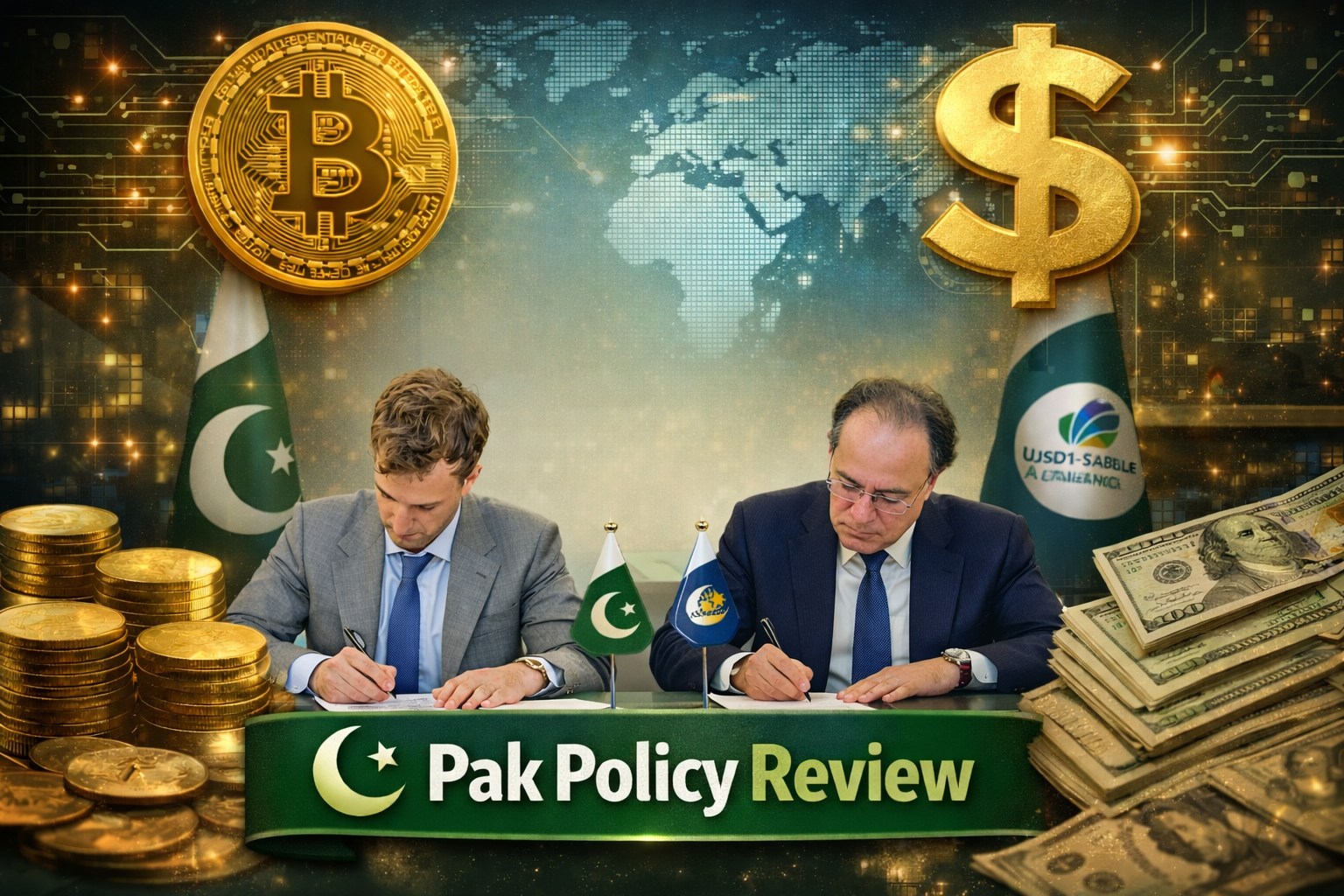
In a significant milestone for Pakistan’s digital economy and financial innovation agenda, the Government of Pakistan has formally signed a Memorandum of Understanding (MoU) with World Liberty Financial, a prominent U.S.-linked financial technology group, to explore the use of stablecoin-based systems for cross-border payments and digital finance infrastructure. This landmark agreement marks one of the first publicly disclosed partnerships between a sovereign state and the crypto-innovative enterprise behind the USD1 stablecoin, reflecting Pakistan’s ambition to position itself as a regional leader in fintech and digital asset regulation.
What the MoU Covers
The MoU — signed in Islamabad by Federal Minister for Finance Muhammad Aurangzeb and Zach Witkoff, co-founder and CEO of World Liberty Financial and its affiliate SC Financial Technologies LLC — outlines a structured collaboration between Pakistan’s financial authorities and the U.S.-based fintech firm.
Key points of the agreement include:
Exploration of Stablecoin Integration: The parties will study how World Liberty’s USD1 stablecoin can be integrated into Pakistan’s digital payments framework, particularly for cross-border settlement and remittances.
Technical Cooperation: Pakistan’s central bank and regulatory bodies, including the Pakistan Virtual Asset Regulatory Authority (PVARA), will engage in dialogue on emerging digital payment architectures, compliance protocols, and infrastructure design.
Regulatory Alignment: The MoU emphasizes the need for innovation that is “aligned with regulation, stability, and national interest,” signifying a balanced approach to adopting new technologies in financial services
Why This Matters for Pakistan
This agreement is more than a symbolic document — it reflects Pakistan’s broader strategic vision to modernize its financial system and embrace digital financial technologies:
1. Financial Innovation and Inclusion
By exploring stablecoin usage, Pakistan aims to enhance the speed, transparency, and cost-efficiency of cross-border payments — a critical improvement for remittance flows that contribute billions of dollars annually to the economy. Digital assets could reduce reliance on conventional intermediaries while improving access for underbanked populations.
2. Regulatory Framework Development
The MoU lays groundwork for evolving legal and regulatory frameworks around virtual assets, stablecoins, and blockchain-based payments — areas where Pakistan has already shown increasing interest with digital asset licensing and discussions on central bank digital currency (CBDC) pilots.
3. Strengthening Global Financial Ties
The visit by World Liberty’s CEO and the high-profile nature of the signing event — attended by senior government officials — also signals Pakistan’s intent to foster international cooperation in fintech and deepen economic ties, particularly with the United States.
About World Liberty Financial and USD1 Stablecoin
World Liberty Financial is a decentralized finance (DeFi)-oriented firm linked to U.S. crypto market developments. Its USD1 stablecoin — a token designed to maintain a 1:1 peg with the U.S. dollar — is engineered for global payments and liquidity across multiple blockchain networks. The stablecoin model involves backing each token with dollar reserves and short-term treasury assets, offering a regulated digital alternative for international transfers and settlement.
Industry Reaction and Future Outlook
Industry analysts view this MoU as a forward-looking step that could help Pakistan leapfrog traditional payment infrastructure challenges and tap into the rapidly growing digital finance sector. While implementation — including pilot programs and regulatory safeguards — will take careful planning, the collaboration has already drawn attention from fintech innovators and policy observers alike.
As Pakistan continues to refine its digital asset strategies and explore novel applications like stablecoins and CBDCs, this partnership with World Liberty Financial represents a pivotal juncture toward integrating blockchain-based solutions within mainstream financial systems.