


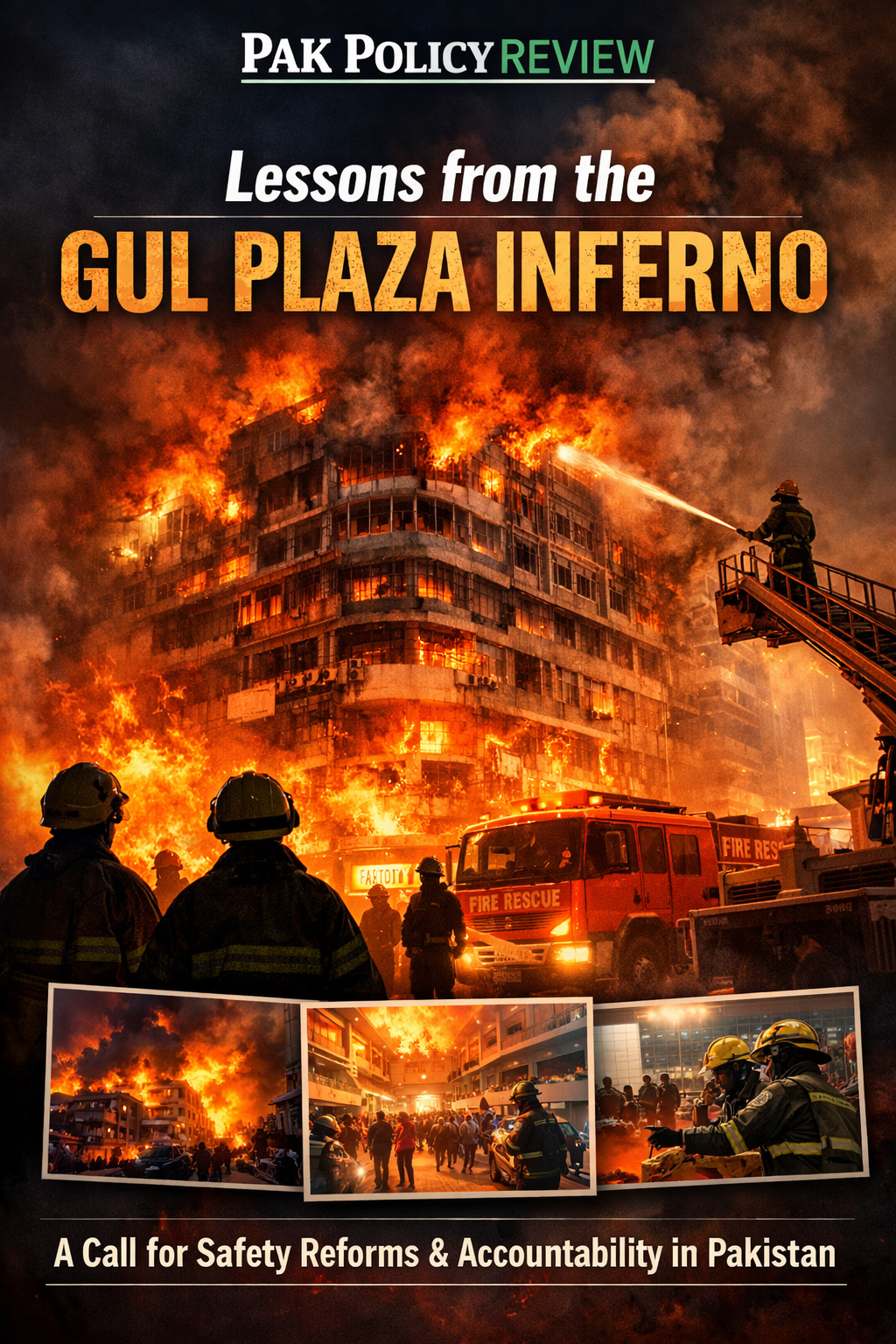
The horrific blaze that tore through Gul Plaza, one of Karachi’s oldest and busiest shopping hubs on MA Jinnah Road, is a grim testament to the cost of regulatory neglect and inadequate safety infrastructure in Pakistan’s urban centres. The fire, which erupted late on the night of January 17, 2026, engulfed the multi-storey complex housing roughly 1,200 shops, killing dozens, injuring many more, and leaving scores missing as rescue operations contended with extreme smoke, structural collapse and chaotic evacuation conditions.
Early reports suggest the blaze may have originated from a short circuit, quickly fanned by flammable merchandise such as carpets, blankets, and resins, and compounded by poor internal ventilation. Rescue personnel spent more than a day battling flames and later cooling the smouldering remains, even as portions of the building threatened to collapse.
What distinguishes this disaster — beyond its tragic human toll — is not merely the speed with which the fire spread, but the systemic failures it exposes: blocked or non-existent exits; illegal encroachments into corridors and escape routes; absent fire detection and suppression systems; and delayed emergency response hampered by poor access and resource constraints.
Recurring Pattern of Fire Tragedies
Gul Plaza is not an isolated catastrophe. Pakistan’s urban and industrial landscape has witnessed several deadly fire incidents in recent decades, revealing deep structural deficits in safety enforcement and emergency preparedness:
- The 2012 factory fires in Karachi and Lahore, among the deadliest industrial disasters in the country’s history, claimed nearly 300 lives and injured hundreds more, highlighting chronic lapses in workplace safety and regulatory compliance.
- In November 2023, a short-circuit fire at another Karachi shopping mall killed at least 11 people and injured dozens, again underscoring fatal fire safety gaps in commercial complexes.
- More recently, in July 2025, a blaze at Lahore’s Hafeez Center basement raised serious concerns about lax enforcement of safety codes in busy multi-storey commercial buildings, even though decisive casualties were avoided due to timely evacuation.
- Frequent factory fires — such as the 2023 Gabol Town incident that killed firefighters and workers — further reflect systemic weaknesses in fire prevention and response capacity.
These recurring tragedies illustrate a pattern clearly mapped in independent safety assessments: a majority of Karachi’s buildings — residential, commercial, and industrial — lack basic fire safety systems, including alarms, sprinklers, and unobstructed exits, while enforcement of building codes remains weak.
Why This Keeps Happening
The underlying causes of these disasters are multifaceted but converge on a few core policy failures:
- Weak enforcement of fire safety regulations and building codes, allowing illegal constructions and unsafe modifications.
- Inadequate firefighting infrastructure and resourcing, including personnel shortages, delayed response times, and lack of modern equipment.
- Absence of mandatory fire detection and suppression systems in older buildings, compounded by poor maintenance of electrical wiring and overloads that frequently trigger short circuits.
- Lack of public and business awareness about fire hazards, prevention measures, and evacuation protocols.
Concrete Safety Reforms for the Future
The lessons of Gul Plaza — and of every fire that has preceded it — demand urgent, structural reforms rooted in accountability and long-term planning:
- Mandatory Fire Safety Compliance & Regular Audits:
All multi-storey commercial and industrial buildings must undergo periodic fire safety audits, with clear certification and penalties for non-compliance. These audits should inspect exits, alarm systems, sprinklers, and emergency lighting. Government directives for immediate safety audits of Karachi’s commercial buildings post-Gul Plaza are a step in the right direction, but enforcement must follow. - Strengthening Enforcement Agencies:
Building control authorities must be empowered and insulated from corruption to ensure that approved plans match built structures, with strict actions against illegal encroachments that block exits or emergency routes. - Modernising Fire & Rescue Services:
Investment in modern firefighting technology, equipment, and training — including high-reach aerial units, thermal imaging cameras, and advanced breathing apparatus — is essential. Response times must be benchmarked and improved through decentralised fire stations. - Urban Planning & Infrastructure Integration:
Emergency access must be a priority in urban planning. Roads obstructed by construction or encroachment — which can delay fire crews — should be cleared and protected as vital lifelines. - Risk Awareness and Fire Drills:
Businesses should be required to train staff in basic fire response, maintain functioning extinguishers and alarms, and conduct regular evacuation drills. Public campaigns can educate visitors and workers alike on how to react during emergencies. - Legal and Insurance Frameworks:
Enforcement of fire safety laws should be backed by legal liabilities for owners and managers of buildings that neglect safety norms. Insurance — appropriately priced and enforced — can provide financial buffers for victims and encourage compliance.
Conclusion
The Gul Plaza inferno should be a watershed moment — not merely another headline in a long list of fire tragedies. It must prompt a comprehensive re-examination of how Pakistan protects its citizens in workplaces, markets, and public spaces. The flames that consumed Gul Plaza are symptoms of deeper governance failures, and preventing future infernos will require coordinated action from policymakers, civil society, industry, and communities. Only then can we ensure that lives and livelihoods are safeguarded, and that the lessons from this tragedy are truly learned.
