


By Mr. Muhammad Waris
In the remote and rugged mountains of Tehsil Moola, District Khuzdar, where villages sit isolated between rocky valleys and seasonal flood paths, a powerful shift has taken place in 2025. The project titled “Advancing Lives, Climate Action, SDGs, and Environmental Protection While Building Climate Resilience in Balochistan” has brought hope, dignity and resilience to communities long neglected and trapped in cycles of poverty, water scarcity and energy deprivation. What was once a region struggling with unsafe water, diesel pollution, malnutrition and lack of education and health services is now a model of community-driven climate adaptation powered by clean solar energy.
The five targeted villages; Rebak, Hero, Mashri Khair, Rustam Abad and Zerkhar lie 30 to 75 kilometers from the nearest roads and up to 170 kilometers from the nearest city. Life in these areas has always been difficult, particularly for women and children who walk miles to fetch water, grind flour manually and navigate a landscape where electricity and health facilities were dreams rather than realities. Seasonal flooding often isolates the villages for days, leaving pregnant women and critically ill patients with no choice but to be carried on makeshift cots through dangerous terrain. Against such daunting circumstances, the successful implementation of this solar-powered development project has become a turning point.
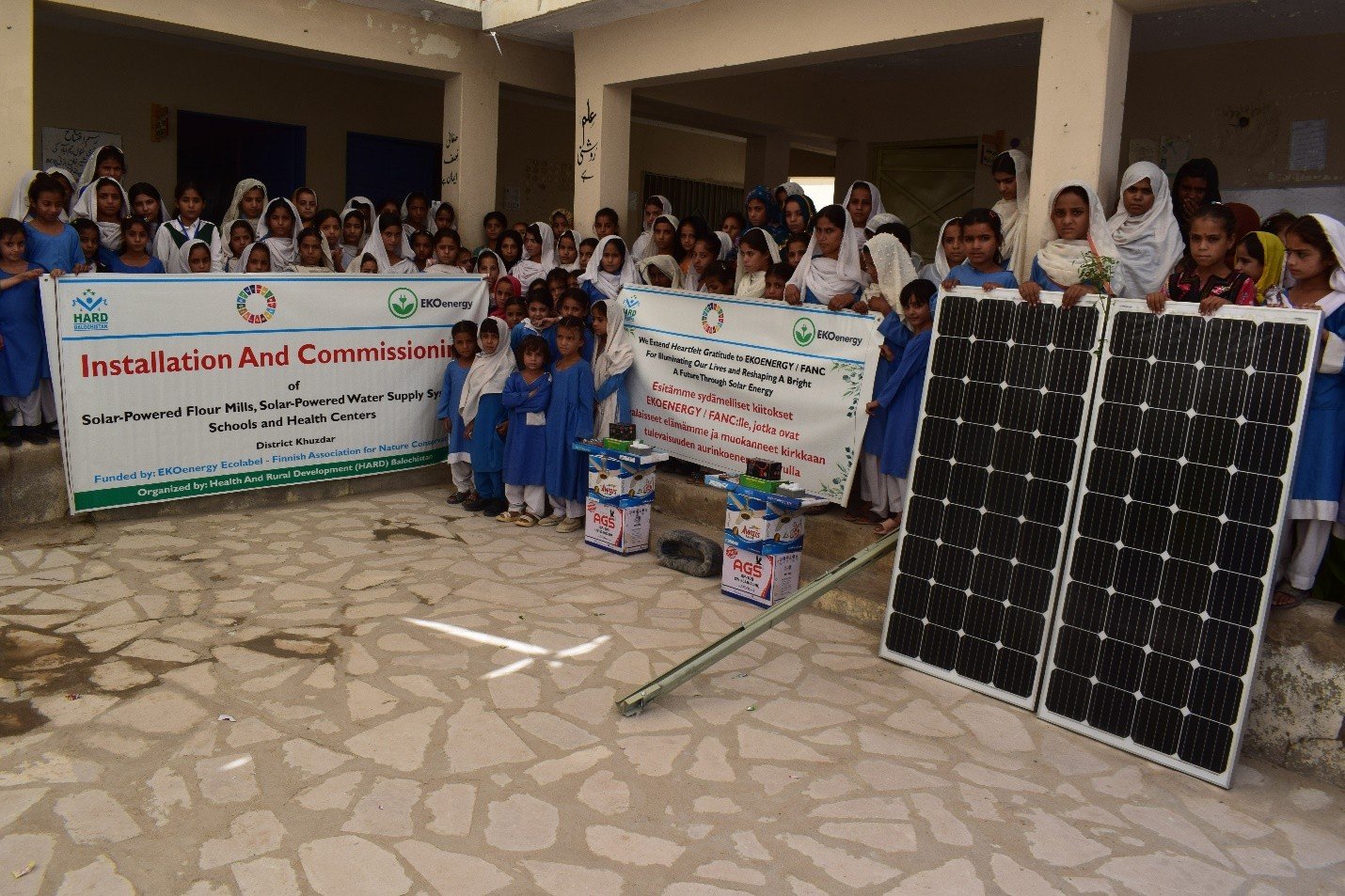
The project installed five solar-powered water supply systems, three solar-powered Atta Chaki flour mills, five solar-enabled schools and three health centers. These reforms have directly benefited 7,405 individuals from 1,104 households, including 1,518 women, 1497 men and 4,390 children, while indirectly benefitting nearly 4,000 more from neighboring communities. The transformation has been both immediate and profound.
Clean water access has drastically changed community health. Before the project, two villages relied on diesel engines that emitted harmful fumes and polluted the environment, while others used open ponds shared with livestock. Today, with water tanks built using cement, blocks and steel covers, families enjoy clean water through solar-powered pumps. More than 90 percent of women report reduced physical strain and community data shows approximately 53 percent decline in waterborne diseases such as diarrhea and skin infections. Children who previously missed school to fetch water now spend their mornings in classrooms powered by sunlight.
The three solar-powered Atta Chaki flour mills have transformed daily routines. Women once spent three to four hours a day grinding grain by hand. Now, they complete this task in minutes, allowing them time to sew, work on embroidery or support their children’s schooling. The mills also operate on a community-managed system where a small fee of 0.40 euros per 40 kilograms contributes to a village sustainability fund, ensuring self-reliance and long-term maintenance. Each village now maintains a revolving fund worth 600 to 800 euros, an unprecedented development in these remote communities.
The establishment of five solar-powered schools has reignited the academic aspirations of children. Teachers now conduct classes with reliable lighting and fans and students study comfortably even during hot summer months. Attendance has increased by 41 percent, particularly among girls who previously stayed home for household chores.
Healthcare access has seen a similar revolution. The three solar-powered Basic Health Units (BHUs) are now equipped to store vaccines, operate small refrigeration and lighting and provide services after dark. Local health workers report that maternal health visits/check ups have increased and emergency patients are now treated locally instead of risking dangerous journeys to distant towns. For families who lost mothers and children in the past due to lack of timely care, this change is life-saving.
The project also addressed a bit more the region’s alarming malnutrition crisis, previously recorded among 166 children, 119 women and 62 people with disabilities. With clean water and reduced physical labor, nutritional absorption and maternal health have improved. Families now use their saved time to focus on local tailoring and emboriodery to earn, small home gardens and better food preparation, contributing to community-wide well-being.
A key strength of this initiative has been the role of EKOenergy Climate Management Committees (ECCMCs). Formed through community elections, these committees consisting of men, women, elders and youth played a central role in procurement, installation, dispute resolution and sustainability planning. Their leadership has strengthened community ownership and taught valuable skills such as solar maintenance, financial management and environmental stewardship.
Climate resilience and environmental protection remain at the heart of this achievement. By eliminating diesel engines, reducing firewood collection and promoting reforestation through awareness sessions, the project has cut carbon emissions and preserved natural landscapes. Community members are now more aware of climate risks, deforestation impacts and the advantages of renewable energy. Many families have stopped cutting trees for fuel, a shift that will safeguard local ecosystems for generations.
The project’s contribution to SDGs 1, 2, 3, 4, 5, 6, 7, 8, 9, 13 and 15 is visible and measurable. Poverty has decreased as families save money previously spent on diesel or medical emergencies. Children have better access to education and women once burdened by labor-intensive work are rising as leaders, entrepreneurs and climate champions. Communities trained as solar technicians/operator now possess skills that will support livelihoods and local green economies.
Seen from the mountains surrounding Moola, this project does more than provide solar systems it rebuilds dignity, restores hope and strengthens climate resilience in some of Balochistan Pakistan’s most isolated communities. With the support of Finish Association for Nature Conservation-EKOenergy, Health And Rural Development has demonstrated how renewable energy can address poverty, health, gender inequality, education gaps and environmental degradation simultaneously. The 2025 initiative stands as a powerful reminder that sustainable development is not only possible but essential in regions most vulnerable to climate change.
