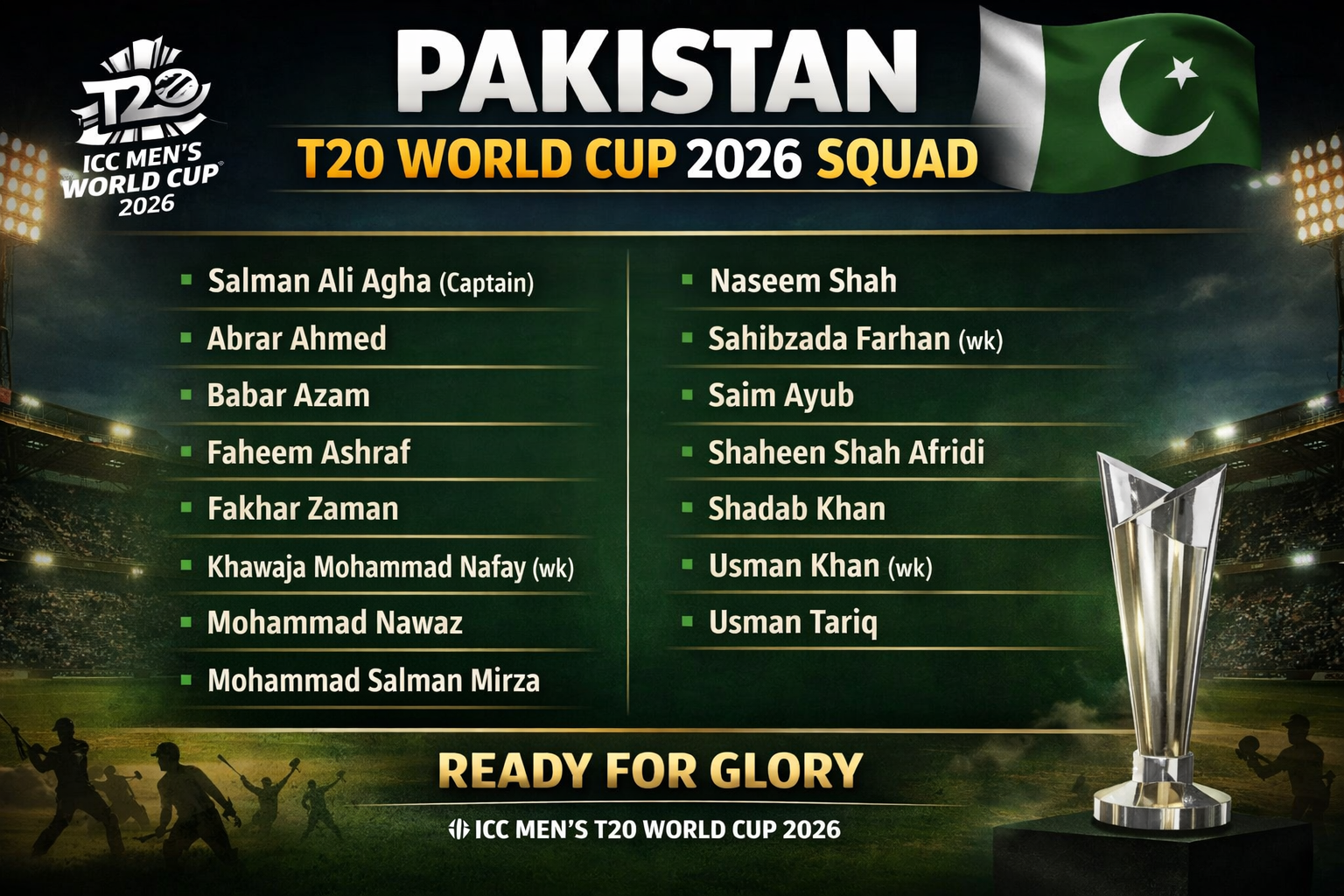
In a significant setback for regional cricket diplomacy, the International Cricket Council (ICC) has confirmed that Scotland will replace Bangladesh in the upcoming ICC Men’s T20 World Cup 2026, scheduled to begin on February 7, 2026, after the Bangladesh Cricket Board (BCB) refused to play matches in India on grounds of security and political concerns
The ICC’s move, which sees Scotland added to Group C of the tournament, has prompted a strong reaction from the Pakistan Cricket Board (PCB) and its Chairman Mohsin Naqvi, who has linked Pakistan’s own participation to the final directive from the Government of Pakistan — specifically the return and approval of the Prime Minister.
According to multiple reports, the ICC replaced Bangladesh after the BCB refused to travel to India for scheduled matches and requested that their fixtures be moved to Sri Lanka due to security concerns—an appeal that the ICC rejected.
This sequence of events has raised questions about consistency in how the ICC treats member nations. PCB Chairman Mohsin Naqvi publicly described Bangladesh’s exclusion as “unfair” and symptomatic of double standards in international cricket governance, asserting that as a full ICC member nation, Bangladesh deserved accommodations similar to the “hybrid model” Pakistan has employed—where its matches are hosted in Sri Lanka due to its political stance on playing in India.
Mohsin Naqvi’s comments at a press briefing reflect a broader narrative:
When asked about prospects of boycott, Naqvi suggested that Pakistan has multiple contingency plans (Plan A to D), but must first receive government approval before any course of action.
Pakistan stands in solidarity with Bangladesh, arguing the BCB’s position warranted accommodation rather than exclusion.
He emphasized that the final decision on Pakistan’s participation lies with the federal government, not the ICC. Pakistan will abide by directives once the Prime Minister returns to the country and advises the PCB accordingly.
Naqvi underscored that one member nation should not dictate terms to another, reiterating calls for consistent treatment across full ICC members.
Political Implications Beyond the Boundary
This dispute underscores how sporting diplomacy intersects with regional geopolitics and domestic governance in South Asia:
1. Governance and Sovereignty
By deferring the final World Cup participation decision to the Prime Minister’s office, Pakistan is reiterating the constitutional primacy of the state over autonomous sporting bodies. The PCB’s stance illustrates how cricket boards are influenced by state policy, political sensitivities, and broader diplomatic stances.
2. Regional Solidarity and Geopolitical Signaling
Pakistan’s vocal support of Bangladesh can be interpreted as a gesture of regional solidarity in response to perceived inequities in international sports governance—especially where security concerns and travel to India are disputed.
3. ICC Credibility and Policy Consistency
The controversy raises questions about the ICC’s policy consistency in accommodating legitimate security concerns and balancing competing member interests. The hybrid model previously extended to Pakistan (and in some cases to India) has not been uniformly applied, according to Naqvi.
Potential Scenarios Ahead
With Pakistan’s participation hinging on government direction, several outcomes are possible:
- Full participation in T20 World Cup 2026, if the government endorses PCB’s engagement despite current tensions.
- Conditional participation with further negotiations with the ICC on hybrid arrangements.
- Boycott of the tournament, aligning Pakistan with Bangladesh’s stance—forcing ICC to seek a second replacement team.
Each scenario carries implications not only for cricketing competition but also for Pakistan’s international sporting diplomacy and bilateral relations within the subcontinent.
The current T20 World Cup row highlights how cricket in South Asia remains deeply entwined with state policy, national identity, and geopolitical conflict. As the PCB positions itself at the crossroads of sport and diplomacy, the decision from Islamabad will shape Pakistan’s cricketing calendar, regional alliances, and its broader engagement with the International Cricket Council.