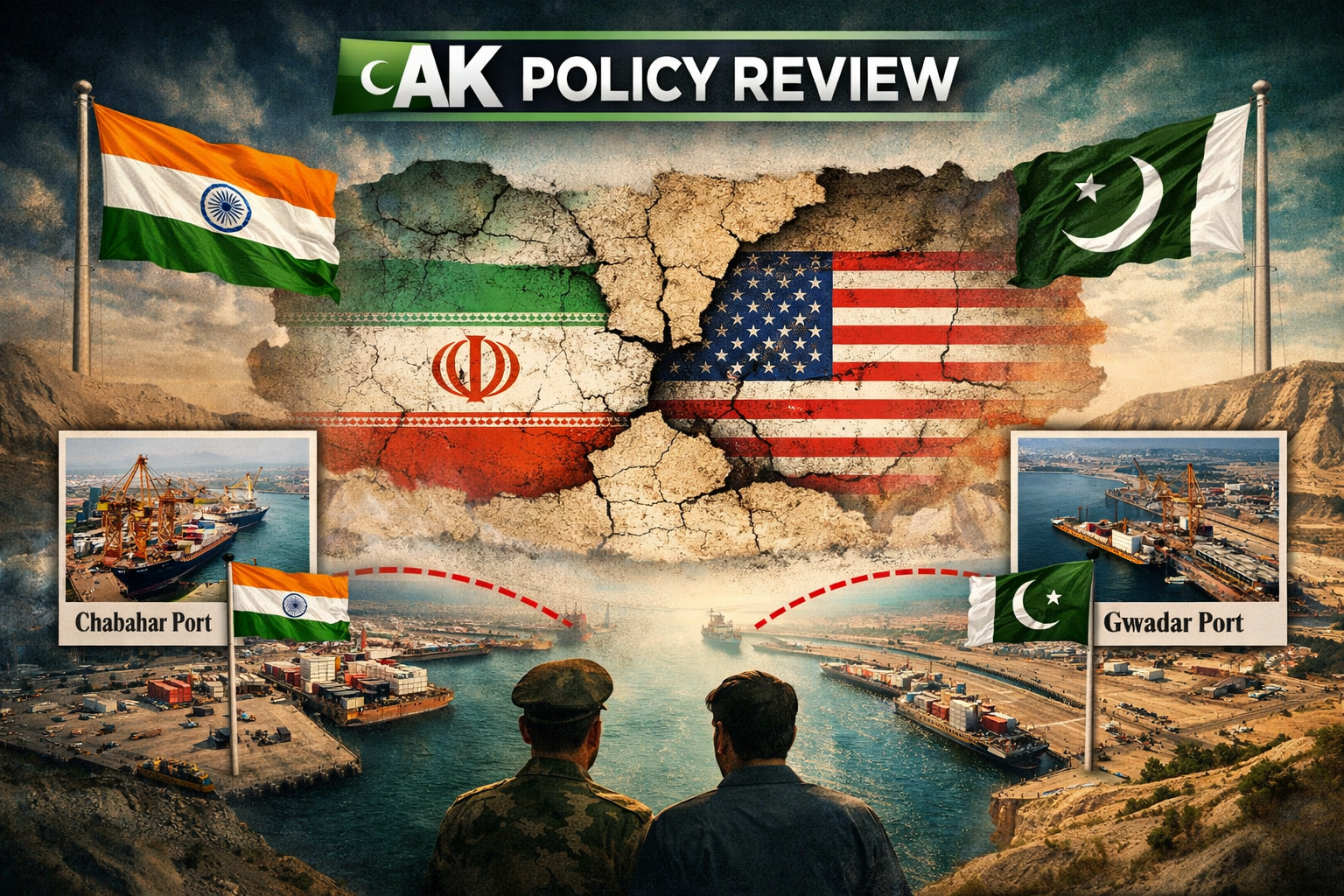
India’s reported withdrawal from the Chabahar Port development project under mounting U.S. pressure marks a quiet but consequential shift in the regional geopolitical landscape. While New Delhi has publicly framed its engagement with Chabahar as limited and conditional, the reality is that U.S. sanctions-related pressure on Iran has significantly constrained India’s ability to sustain its ambitions. For Pakistan, this development carries strategic, economic, and diplomatic implications that merit close attention.

- No Fabric
- 【Large Capacity】:Ukeetap Silverware organizer included 7-9 compartments with 2 expandable panels maximize drawer space. …
- 【Adjustable Size】:The width of the utensil drawer organizer expands from 12.4″ to 21″, perfectly fitting most standard d…
Chabahar’s Original Strategic Logic
Chabahar was conceived by India as a geostrategic counterweight to Pakistan’s Gwadar Port. It offered New Delhi an alternative route to Afghanistan and Central Asia that bypassed Pakistan, reducing Islamabad’s transit leverage. For years, Chabahar symbolized India’s attempt to insert itself into the western Indian Ocean–Middle East–Central Asia connectivity matrix, while simultaneously hedging against China–Pakistan Economic Corridor (CPEC).
However, Chabahar’s progress remained uneven. Sanctions on Iran, financing difficulties, and regional instability ensured that the port never fully realized its promised potential. India’s withdrawal, even if partial or de facto, underscores the fragility of projects built on sanction-sensitive geopolitics.
Strategic Gains for Pakistan
From Pakistan’s perspective, India’s exit narrows the strategic competition narrative around Gwadar. While Gwadar and Chabahar were often portrayed as rival ports, in reality the competition was more political than commercial. Still, India’s presence in Chabahar carried symbolic and intelligence-related concerns for Pakistan, particularly regarding surveillance and influence near its western flank.
With India stepping back, Pakistan gains:
- Reduced Strategic Encirclement Concerns
India’s diminished footprint in Iran weakens the long-standing perception in Islamabad of a coordinated eastern–western pressure strategy. This eases Pakistan’s security calculus, particularly in Balochistan, where external involvement has long been a sensitive issue. - Enhanced Relative Importance of Gwadar
Gwadar now stands out more clearly as the primary deep-sea port anchoring regional connectivity between South Asia, China, the Middle East, and Central Asia. While Gwadar faces its own challenges, the absence of an India-backed Chabahar strengthens its relative strategic value. - Diplomatic Space with Iran
India’s withdrawal may create room for Pakistan to recalibrate its relationship with Iran. While Tehran will continue to pursue its own interests, Islamabad could explore pragmatic cooperation on border management, trade, and regional connectivity without the complication of Indo-Iranian strategic signaling.
Limits to Over-Optimism
That said, Pakistan should avoid overestimating the immediate benefits. Chabahar will not disappear from the regional map. Iran is likely to seek alternative partners—possibly Russia or China—to keep the port functional. Moreover, Gwadar’s success depends less on India’s setbacks and more on Pakistan’s internal security, governance, and economic stability.
Additionally, U.S. pressure that constrained India could equally affect any future Pakistan–Iran connectivity initiatives. Sanctions remain a structural constraint, not a country-specific one.
Policy Implications for Islamabad
India’s retreat from Chabahar should prompt Pakistan to move from passive satisfaction to active strategy. Islamabad must:
- Accelerate non-security components of CPEC, particularly trade facilitation and special economic zones.
- Improve local integration in Gwadar to ensure sustainability and legitimacy.
- Engage Iran through quiet diplomacy focused on trade and border stability, rather than zero-sum port rivalry narratives.
- Position Gwadar as a commercial hub, not merely a strategic asset.
Conclusion
India’s withdrawal from the Chabahar project under U.S. pressure is strategically significant for Pakistan, but not transformative on its own. It removes a layer of geopolitical pressure and reinforces Gwadar’s relevance, yet the real opportunity lies in Pakistan’s response. Strategic vacuums only benefit those prepared to fill them with coherent policy, economic credibility, and regional diplomacy. For Pakistan, the moment calls not for celebration, but for strategic seriousness.